Free Printable Medication Log SheetWrite down each dose with the time, the medicine, the dose and who gave it, then print the log or save it as a PDF. Or print a blank log to keep by the medicines. Nothing you type is uploaded.
Layout
Whole page · the printed page has no watermark or logo.
Examples2 layouts filled in with made-up details. Open one to start with that layout, or print a blank template to fill in by hand.
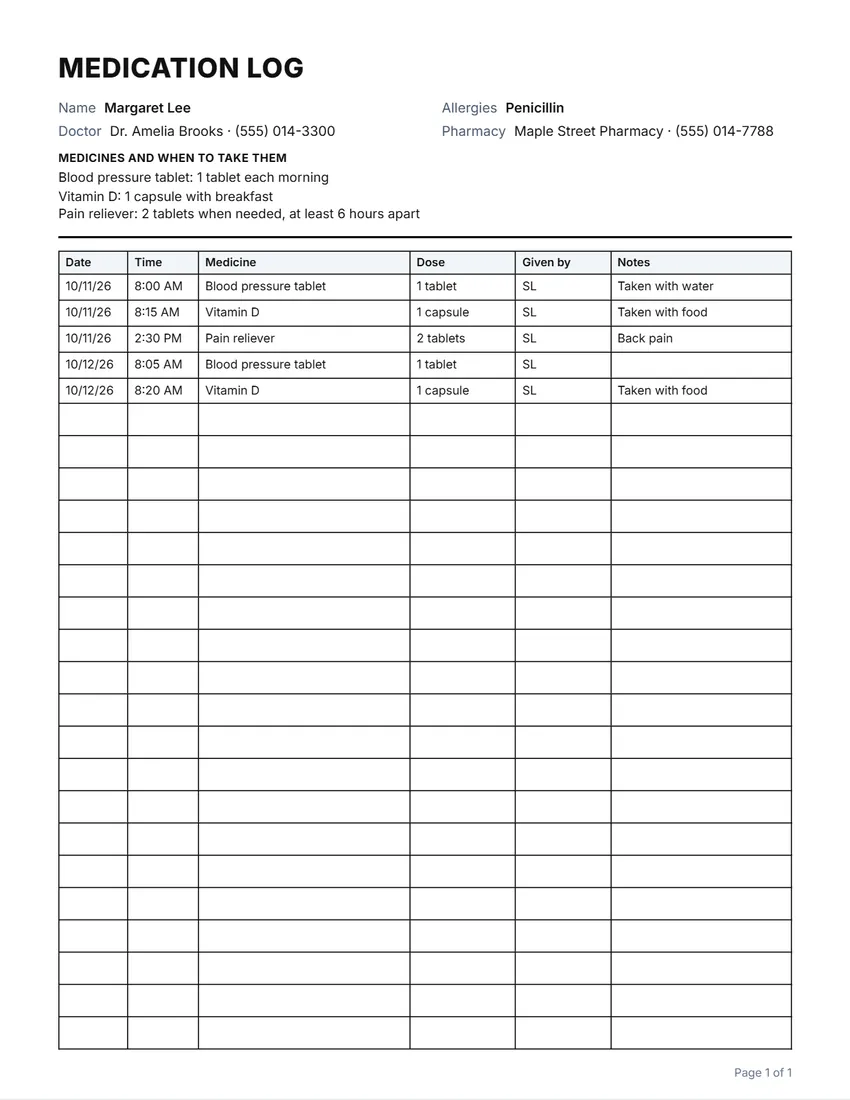 Default layout
GridRuled cells like a printed logbook.
Start with this layoutOpen
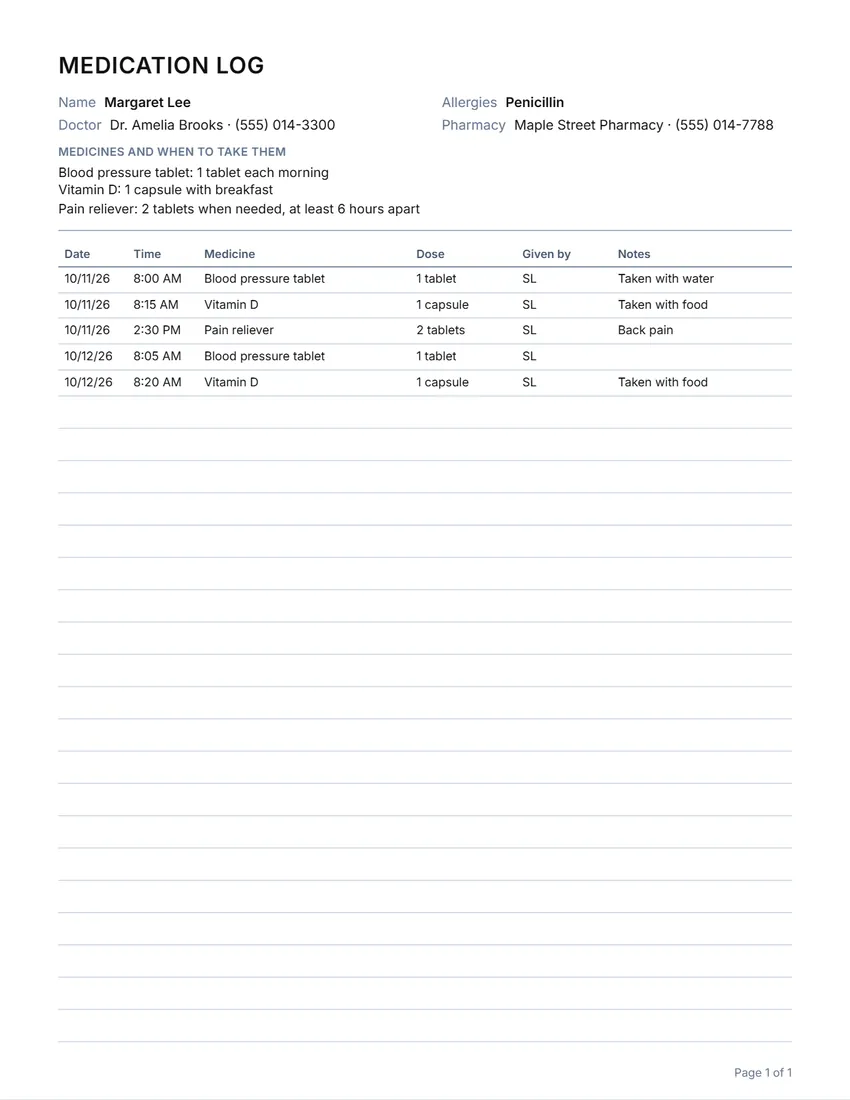 Layout
LinedLines between the rows only. Saves ink.
Start with this layoutOpen
Prefer to fill it in by hand? Print a blank template and write on it.
Related tools
Goes well with this one
Was this tool useful?
Notice: Generated via SnapPaperwork. A record of what was written down, not medical advice. Follow the label, the prescription and your doctor or pharmacist.
Something missing? Tell me what you need.
What is a medication log?
A medication log is a printed table where you write down each dose that was given: the date, the time, the medicine, how much and who gave it. It helps a family or a carer keep track of doses in one place. Keep it where it is easy to reach and follow the label, the prescription and the advice of the doctor or pharmacist.
How to keep a medication log in 3 steps
-
Add who it is for
The name, any allergies, the doctor and the pharmacy, and the list of medicines with when to take them, copied from the labels.
-
Write each dose
The date and time, the medicine, the dose, who gave it and a note (taken with food, refused, a side effect). Or leave it blank to fill in by hand.
-
Print it and keep it close
Keep the log with the medicines, take it to appointments, and print extra pages for the weeks ahead.
What to write down
- The date and the exact time of each dose, as soon as it is given.
- The medicine’s name and the dose, as the label says (“1 tablet”, “5 ml”).
- Who gave it, or their initials, when more than one person helps.
- Anything unusual: a dose refused, missed, late or vomited, or a side effect.
- Allergies at the top, where anyone can see them.
Tips for families and caregivers
- Keep one log per person, with the medicines, so everyone who helps uses the same one.
- Check the log before giving a dose, so nothing is given twice.
- Take the log to doctor and pharmacy visits: it shows what was actually taken.
- When a medicine or dose changes, update the list at the top and start a new page.
A record, not advice
This log only records what you write in it. It does not check doses or medicines. Always follow the label, the prescription and your doctor or pharmacist, and ask them if you are unsure about a dose.
Frequently asked questions
Is this medication log free?
Yes. It is free to use, needs no account or sign-up, and never adds a watermark or a SnapPaperwork logo to your log.
Can I print a blank medication log?
Yes. Leave the doses empty: the page fills with empty rows to write in, and you can add up to 10 extra blank pages. Fill in the name and allergies first if you like.
What should a medication log include?
The person’s name, allergies, doctor and pharmacy, and for each dose the date, time, medicine, dose, who gave it and any notes. A list of the medicines and when to take them at the top helps anyone who steps in.
Does it check doses or remind me?
No. It is a record you print or save, not a reminder or a dosing guide. Follow the label and the prescription, and ask your doctor or pharmacist about doses.
Is the health information I type uploaded?
No. Everything you type stays in your browser and is never sent to me. It is saved on your own device so it is there next time; use Clear Form on a shared computer.